Model comparison
BOSS WL-20 vs WL-20L: which one does your guitar need?
The practical difference between the BOSS WL-20 and WL-20L, including passive pickups, active pickups, acoustic preamps and cable-tone simulation.
Buy the WL-20 for a conventional passive electric guitar. Buy the WL-20L for active pickups, an onboard acoustic preamp or another low-impedance source. If you regularly switch between both, the WL-50 is the more flexible BOSS option.
The extra letter is easy to dismiss. It should not be. WL-20 and WL-20L use the same transmitter, wireless platform and automatic setup, but their receivers treat the signal differently.
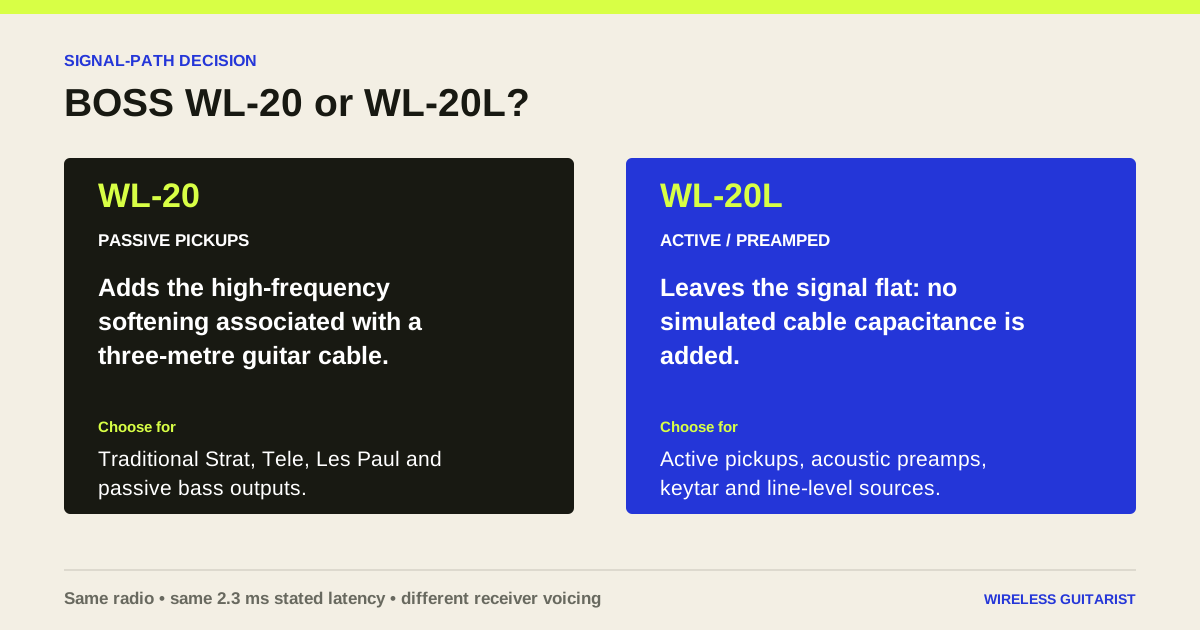
The choice is about cable tone, not wireless performance. BOSS builds the subtle high-frequency roll-off of a three-metre guitar cable into the WL-20. The WL-20L leaves the signal unaltered. That makes each version a better match for a different kind of instrument.
Independent review cross-check
What the reviews add
The radio hardware is shared. Independent coverage points to signal voicing and instrument output as the deciding factors. Owner reports also justify testing either model in the venue where it will be used.
BOSS WL-20 and WL-20L hands-on test
Bonedo tested the two versions side by side and focused on the cable-tone circuit. Its findings point to pickup type and onboard electronics as the basis for choosing a model.
Read the original reviewBOSS WL-20L owner reviews
The long owner-review record is mixed. Many players report trouble-free acoustic, bass and church use; others describe dropouts in busy environments or hardware failures. The compact format offers convenience, with no immunity from RF or hardware problems.
Read the original reviewThe short answer
A traditional Strat, Tele, Les Paul or passive bass normally belongs with the WL-20. Its cable-tone circuit restores the slight softening at the top end that passive pickups develop when they drive a normal guitar lead.
An active guitar, active bass or electro-acoustic with an onboard preamp normally belongs with the WL-20L. These low-impedance outputs are far less affected by cable capacitance, so adding cable tone is unnecessary. BOSS says the WL-20 will still work, but it may sound warmer and softer than the same instrument through a cable.
- Passive pickups: WL-20 is the default choice.
- Active pickups or onboard preamp: choose WL-20L.
- Passive guitar but you like a bright, buffered sound: WL-20L is valid.
- A collection containing both active and passive instruments: consider WL-50 and switch cable tone off or on as required.
What cable tone actually changes
A passive pickup, guitar cable and amplifier input form an electrical circuit. The cable's capacitance gently reduces the highest frequencies; many players hear that as familiar rather than defective. Remove the cable and a passive guitar can sound a little more immediate or bright.
WL-20 recreates that effect permanently. WL-20L does not. This is not an active-pickup input pad, a different radio or a faster codec. The two systems are otherwise functionally the same, which is why choosing by pickup type is more useful than comparing their headline specifications.
One compatibility trap remains
Both sets use the BOSS WL-T plug-in transmitter. Some active instruments use unusual TRS output-jack wiring to switch their battery, and some recessed sockets physically obstruct a plug-in transmitter. BOSS documents both cases. Check the WL-T compatibility drawing if your output socket is unusual; a short mono extension lead can solve some electrical or physical mismatches.
That caveat is separate from WL-20 versus WL-20L. Buying the L model fixes the cable-tone choice, but it does not change the transmitter's plug or its interaction with the instrument jack.
When the WL-50 is worth the extra board space
The WL-50 puts the receiver in a stompbox and offers OFF, SHORT and LONG cable-tone settings. It is the sensible BOSS answer for a guitarist who takes a passive electric and an active or preamped instrument to the same show.
It also docks and charges the transmitter and can distribute DC power when used with the appropriate BOSS supply. The trade-off is obvious: the WL-20 pair fits in a pocket, while WL-50 permanently occupies pedalboard space.
Common questions
Before you buy
Can WL-20L be used with passive pickups?
Yes. BOSS says it works, but the result may sound slightly brighter than a normal guitar cable because WL-20L has no cable-tone simulation.
Can WL-20 be used with active pickups?
Usually, yes. BOSS notes that it can sound warmer or softer than a cable because its cable-tone processing is unnecessary for a low-impedance active output.
Are WL-20 and WL-20L different transmitters?
No. Both packages use the WL-T transmitter. The relevant difference is the cable-tone processing in the receiver.
Primary sources
Where the specifications came from
Manufacturer figures remain labelled as claims. The independent review links above report what individual reviewers found in their own rigs; they are evidence, not a guarantee of performance in every venue.
Continue researching
More buying guides
Best systems for active pickups
Wireless guitar systems for EMG, Fishman Fluence and other active pickups, chosen by documented input support rather than guesswork.
Read guide →Pedalboard guideBest pedalboard wireless systems
Compare BOSS WL-50, Xvive P58, BOSS WL-60, Sennheiser XSW-D and Shure GLXD16+ for pedalboard use.
Read guide →RF explainer2.4 GHz vs 5.8 GHz
How to choose between 2.4 GHz and 5.8 GHz wireless guitar systems for home, rehearsal rooms and live venues.
Read guide →