Acoustic compatibility
Best wireless systems for acoustic-electric guitar
How to choose a wireless system for an acoustic guitar with a piezo pickup or onboard preamp, including connector and interference issues.
BOSS WL-20L is the simple choice for a typical preamped acoustic-electric. Fender Telepath is more adaptable when you also use passive electrics. For a stage pedalboard and greater range, consider Sennheiser XSW-D; test every piezo system with the exact guitar before committing.
An acoustic-electric guitar is not simply a quiet electric guitar. Most have an onboard preamp, many use piezo elements, and their output sockets are often recessed into the endpin or side of the body. Each detail can change whether a plug-in wireless transmitter behaves properly.
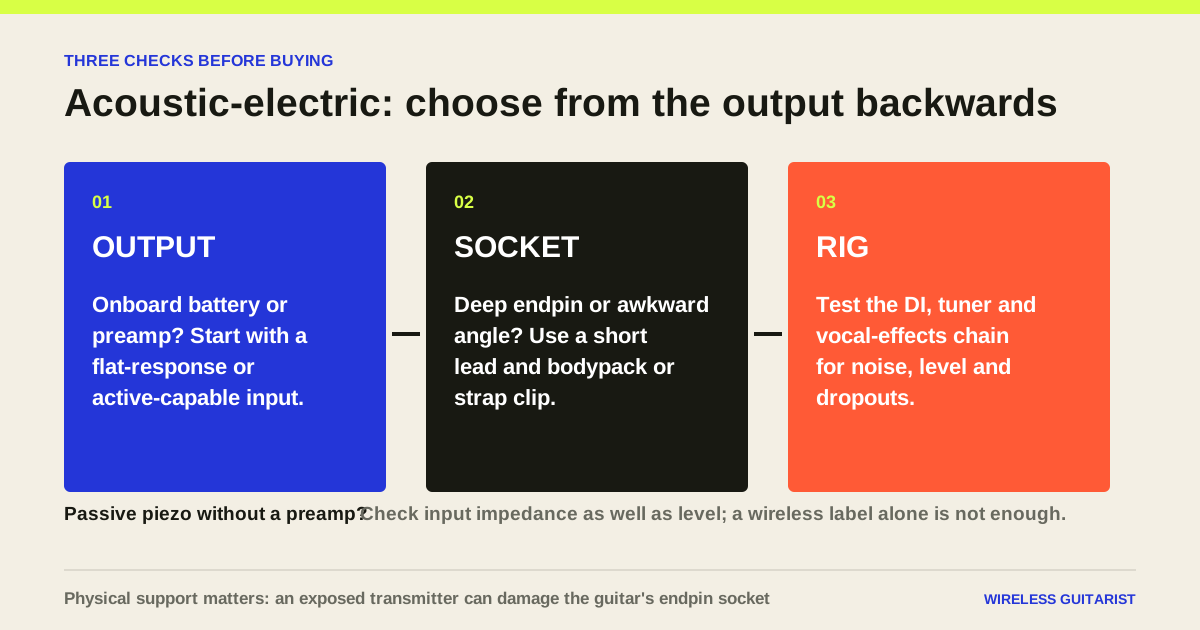
The safest route is to match the transmitter to the guitar's output electronics first, then check physical fit. Range and latency come afterwards.
Independent review cross-check
What acoustic players should take from the reviews
For acoustic-electric instruments, physical fit and the onboard preamp are inseparable from RF performance. Reviews of otherwise strong systems repeatedly show that a short extension lead or bodypack can be the better engineering choice.
BOSS WL-20L owner reviews
Many owners describe successful use with Taylor, Ovation and piezo-equipped instruments, often praising the flat tone and simple pairing. Others report high-pitched noise or dropouts in their rigs, so the exact preamp, pedal chain and venue still need a trial.
Read the original reviewSennheiser XSW-D review
Although the review used electric guitars, its fit lesson transfers directly to acoustic endpin sockets: the straight plug was secure on one guitar but better supported by the included extension cable and strap clip on another.
Read the original reviewFender Telepath review
The rotating plug fitted a wide range of sockets in testing, and the active setting reduced level for hot electronics. Telepath is therefore plausible for an acoustic preamp, but the review did not test an acoustic guitar specifically.
Read the original reviewWhy WL-20L is the natural starting point
BOSS specifically names electro-acoustic guitars with onboard preamps as a WL-20L use case. The L receiver omits cable-tone simulation, which is appropriate because a low-impedance preamp output is much less affected by normal guitar-cable capacitance.
Do not confuse that recommendation with universal physical compatibility. An endpin socket may be too deeply recessed, and unusual TRS battery-switch wiring can cause problems with a rigid plug-in transmitter. BOSS publishes outline drawings and remedies for several exceptions.
Telepath for mixed acoustic and electric sets
Fender Telepath has a switch for active and passive instruments, so it suits a set that moves between a preamped acoustic and a passive electric. Its articulated plug and eight-hour stated battery are practical advantages.
As with any plug-in set, check that the transmitter does not press against the guitar body or trap the strap. A short, good-quality extension cable is preferable to loading a delicate endpin socket with an awkward transmitter angle.
Piezo systems deserve an exact-guitar test
Xvive warns that its U2 can produce a high-pitched noise with some active pickup systems, particularly piezo pickups. The cause is not RF congestion; it is interaction between the electronics and the nearby transmitter. Moving the transmitter away on a short extension can help, but the more responsible buying advice is to test or choose a model with explicit active support.
An acoustic preamp can also produce more level than a passive magnetic pickup. Play hard with any onboard boost engaged and listen for clipping. A system that behaves during fingerstyle practice can still overload during a percussive live passage.
When a bodypack is the better acoustic solution
A bodypack and short cable add one more item to the strap, but they remove weight from the guitar socket and keep the radio electronics away from the preamp. Shure GLXD16+ offers the most robust version in this catalogue; BOSS WL-60 is the less expensive replaceable-battery alternative.
For players who stand still beside a pedalboard, Sennheiser XSW-D supplies an extension cable and belt clip with its pedalboard set. Its five-hour battery needs planning, but the arrangement can be kinder to an awkward acoustic socket than a transmitter hanging directly from it.
Common questions
Before you buy
Can I use an electric-guitar wireless system with an acoustic guitar?
Often, yes, if the system accepts the preamp's output and the transmitter fits the socket. Manufacturer guidance for active or low-impedance instruments is preferable.
Why does a piezo guitar make a high-pitched noise with wireless?
Some onboard electronics can interact with a transmitter positioned immediately beside them. A different system or short extension cable may solve it.
Should an acoustic guitar use WL-20 or WL-20L?
BOSS recommends WL-20L for a typical acoustic-electric with an onboard preamp because it does not add passive-guitar cable-tone simulation.
Primary sources
Where the specifications came from
Manufacturer figures remain labelled as claims. The independent review links above report what individual reviewers found in their own rigs; they are evidence, not a guarantee of performance in every venue.
Continue researching
More buying guides
BOSS WL-20 vs WL-20L
The practical difference between the BOSS WL-20 and WL-20L, including passive pickups, active pickups, acoustic preamps and cable-tone simulation.
Read guide →Compatibility guideBest systems for active pickups
Wireless guitar systems for EMG, Fishman Fluence and other active pickups, chosen by documented input support rather than guesswork.
Read guide →Pedalboard guideBest pedalboard wireless systems
Compare BOSS WL-50, Xvive P58, BOSS WL-60, Sennheiser XSW-D and Shure GLXD16+ for pedalboard use.
Read guide →